


Turning Art Into Action Through Community Engagement and Social Justice
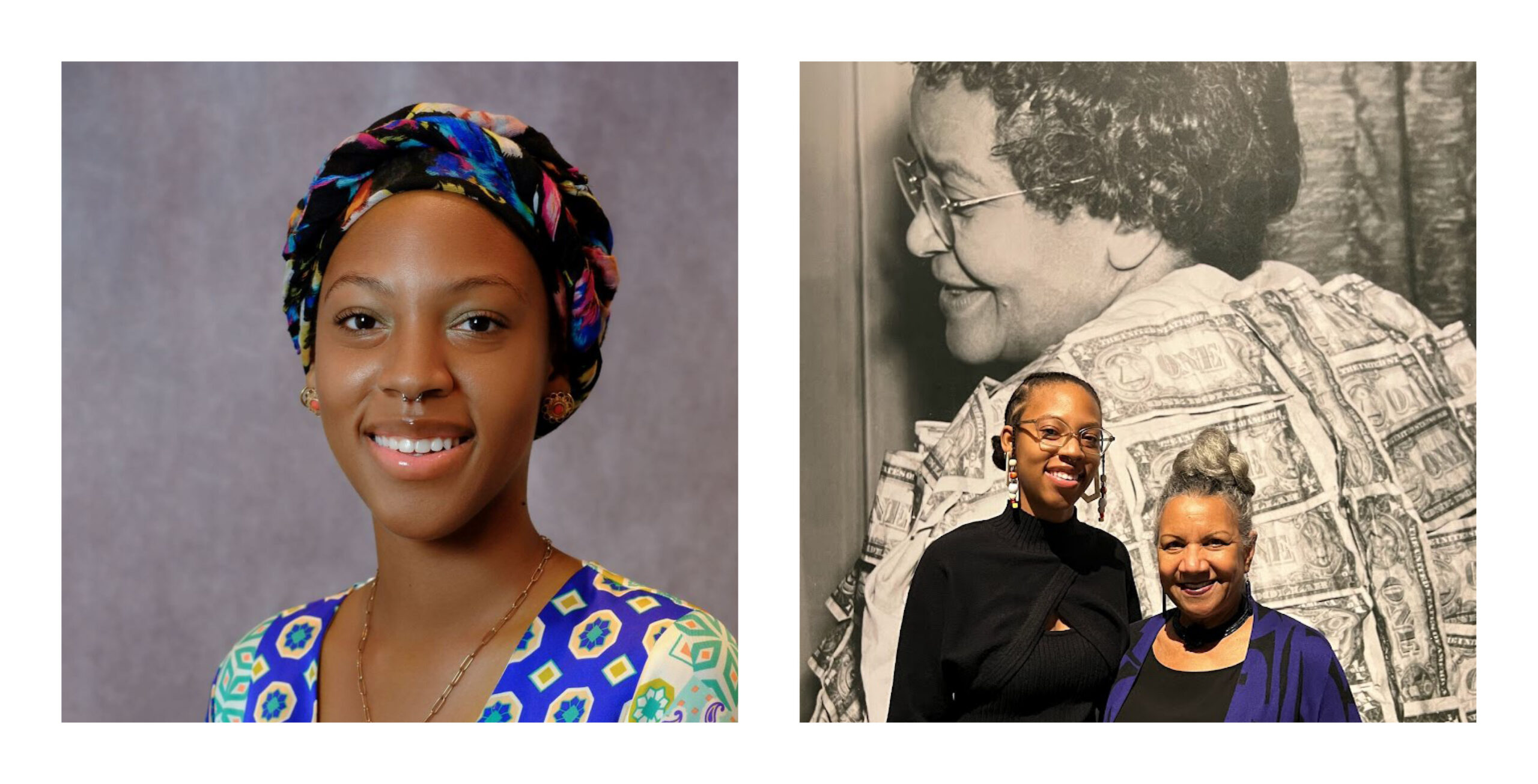
Everley Davis ’18 found her calling in a career at the intersection of art, culture and social justice—but her journey began as a Sociology major here at Bradley. Today Davis is Assistant Curator and Director of Community Engagement at the Peoria Riverfront Museum. There she helped create the Every Student Initiative, which expands museum access to students at 50 schools in the central Illinois area. As Curator, she has worked tirelessly to bring innovative exhibits to the museum, many of which have highlighted social justice issues. Part of Davis’s mission is to cultivate relationships with diverse artists to “bring a reflection of our community into formal institutions that do not have a history of celebrating diversity.” While museums have historically been elite spaces, she wants to make the Peoria Riverfront Museum a space where the whole community can gather. (Above: Davis with A’Lelia Bundles, the great granddaughter of Madam CJ Walker, in her first exhibition, The Life and Legacy of Annie Malone.)
For all her contributions to Peoria, Davis was selected by Mayor Rita Ali as one of the city’s 50 emerging role models—and was also named one of Peoria’s “Forty Leaders under 40” in 2024. Today, she gives back to Bradley by providing Sociology and African American Studies students with museum internship opportunities. And last fall, she delivered a guest lecture in Dr. Whetstone’s Foundations of Social Justice course about how her recent exhibit, Joyful Resistance, is a form of art as social justice. The exhibit is the first of its kind at the Riverfront Museum, “a multidisciplinary collection of works from the pioneering Black American artists, authors and designers across the nation, spanning generations.” You can still see the full exhibition on display until the end of the year.
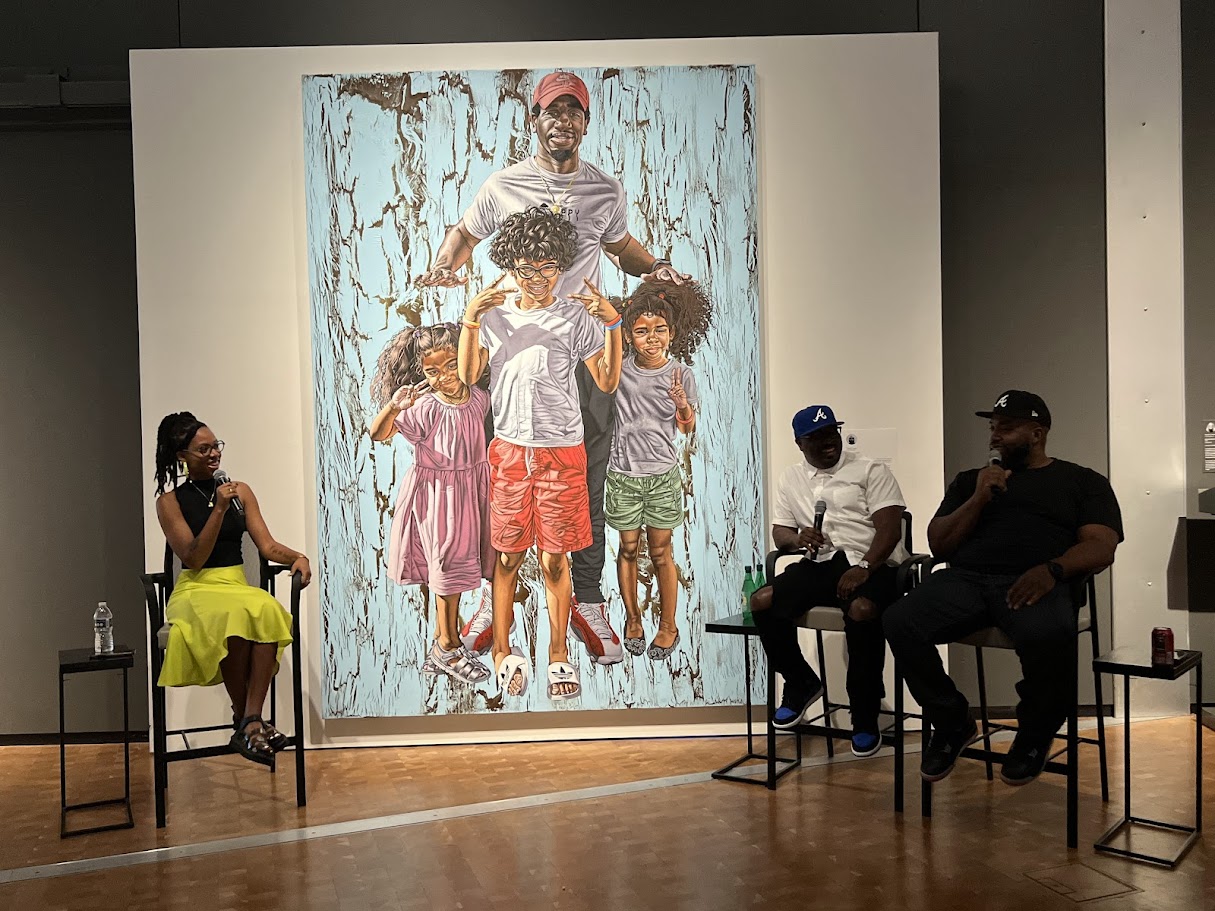
Everley, artist Alfred Conteh, and filmmaker Arshley Emile discuss the Museum’s acquired work, Our Greatest Inheritance featuring a Peoria family. The commissioned artwork and accompanying documentary The Unseen Majority reflects Conteh’s mission to portray Black life in art for everyday people.
Q&A with Everley Davis
Can you share a favorite memory when you were a Sociology student?
I have fond memories with each of my classes and professors. Sociology was something I was never introduced to in high school, and I fell in love with the content immediately. The frameworks and critical lens from my sociology classes helped me gain a deeper appreciation of the diverse groups I studied in my other majors. I also deeply appreciated the opportunity to conduct a qualitative study of my own design. You learn the best through experience and while it was hard work, it was worth every moment. While it was a class that was taught by Dr. Crawford, I received tremendous support from Dr. Whetstone in drafting, analyzing, and writing my final paper.
Talk about your current role and how you got there.
I joined the museum in 2021 as the Educator and Student Engagement Coordinator after my previous work in early education and the arts with organizations like Preschool for All and ART Inc. My job quickly expanded beyond work with students to programs and events for the community. As the Director of Community Engagement and Assistant Curator, I now manage grants from Alice Walton’s Art Bridges Foundation, direct a small but mighty team of docents and education guides, and continue to find ways to spark further learning and build the confidence of my community by sharing impactful stories through the objects selected to exhibit.
How do you use or apply knowledge from your major in your current work?
Understanding a community and its diversity were skills I learned in my sociology coursework. I got a chance to experiment with that in the Sociology Club when inviting the Peoria community and Bradley students to come together for a talk given by [Black Lives Matter co-founder] Patrisse Cullors.
As a Peoria native and Bradley student, I had seen both sides of the “Bradley bubble” and wanted to find a meaningful way to bridge the gap. Sometimes that starts by sharing space and being in dialogue over a common issue. The same extends to my work at the museum. You have to take into account the benefits and constraints experienced by each group and know that each person is multifaceted. The things I learned help me see from a vantage point different from my own experience to be aware of the different needs within my community so I can best serve all.
What is one piece of advice you would give to current students?
My piece of advice is to try a bit of everything and ask questions along the way. Sociology applies to everything, so the door is open to vast opportunities. Also, say hello to everyone because you never know if and how that person will show up later in your life.