


Designing Spaces for Healing
Working alongside professional designers on a real-world, pro bono project, Bradley students applied research, creativity, and cultural understanding to reimagine the patient experience at a children’s hospital in Southeast Africa.
When students in Professor Gary Will’s Information Design course began a new class project, they weren’t designing for a local business or campus client. Instead, they were creating concepts that could help transform the experience of children receiving life-changing medical care nearly 8,000 miles away.
The project challenged Bradley students to think beyond traditional graphic design. Working alongside Chicago-based creative agency Rule29, graduate students at Kent State University, and CURE International, they developed concepts for a wayfinding and environmental graphics system at Beit-CURE Children’s Hospital in Malawi using color, illustration, and storytelling to help children feel more comfortable while navigating the hospital. The pediatric hospital provides more than 2,500 reconstructive and orthopedic surgeries each year at no cost to families.
For Justin Ahrens, founder of Rule29, the project began with a simple question. “These hospitals are doing incredible, life-changing work,” Ahrens said. “But when I looked at photos of the spaces, they were white and sterile, which can be intimidating for children. I started researching how design, color, and the environment can affect a person’s emotional state and healing, and I wanted to do something.”
That idea grew into a collaborative, pro-bono initiative bringing together professional designers, researchers, and students. While Ahrens raised funding for the project, Kent State graduate students conducted extensive research into environmental design in pediatric healthcare. Their findings showed that nature-inspired, culturally meaningful imagery can have measurable therapeutic benefits for children.
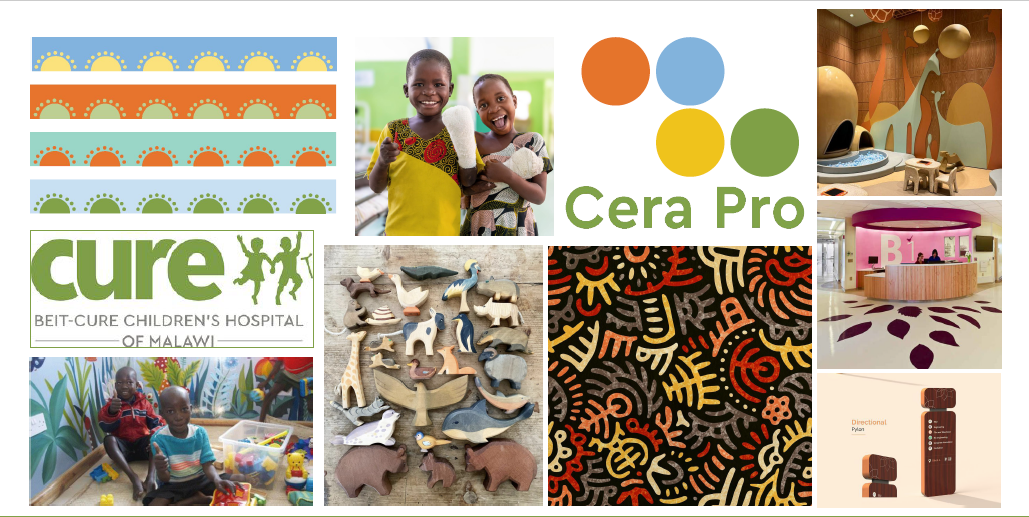
Rule29 partnered with CURE International to create a comprehensive creative framework, including mood boards exploring calming landscapes, Malawian art and patterns, local artists, and a color system inspired by the country’s flag to help guide patients and families through the hospital.
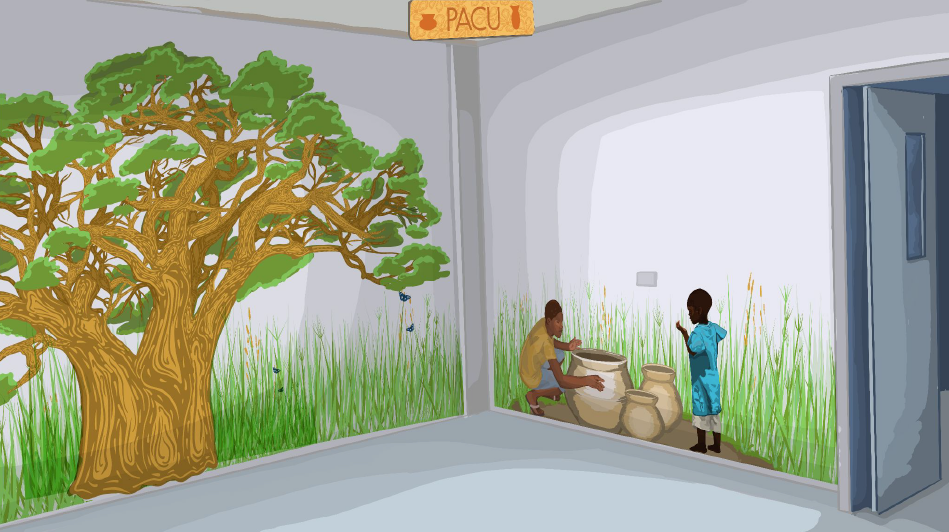
Armed with that research, students in Bradley’s ART 405 Information Design course were challenged to turn strategy into visual solutions. “I try to incorporate real client projects into my coursework whenever possible,” said Will. “I’ve worked with Justin several times, so we knew how to approach the brief. By this point in the curriculum, students understand the importance of researching who they’re designing for, where the design will exist, and why it matters. The ‘how’ comes after that.”
Working in teams, students immersed themselves in Malawian culture while considering the needs of young patients navigating an unfamiliar hospital.
Graphic design major Tatum Eads ’26 said her team approached the project through a child’s eyes. “We explored cultural references from Malawi and incorporated animals native to the region into our designs,” she said. “We wanted the spaces to feel welcoming and engaging while still reflecting the local culture.”
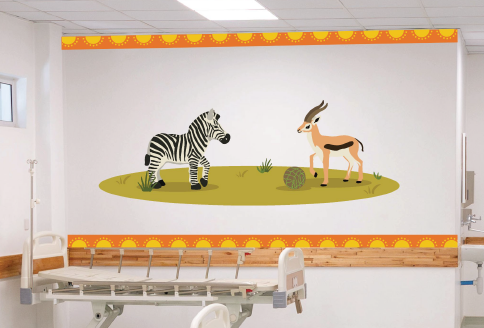
Jamie Dagenais ’26 and her teammates divided their research into several focus areas. “We studied Malawian art, researched the kinds of things children in Malawi enjoy—from sports and games to art—and looked at children’s hospitals around the world to see what worked well with signage, artwork, and room layouts, as well as what we wanted to avoid,” Dagenais said.
Rather than directing the creative process, Will encouraged students to discover their own solutions.”I prefer not to give students ideas,” he said. “Instead, I help guide the journey their concepts take.”
That freedom to explore proved valuable. One concept developed by Bradley students—depicting native animals as carved wooden figures—sparked a direction that continued well beyond the classroom. The idea ultimately evolved into the hand-carved animal wayfinding system Rule29 incorporated into a later phase of the project.
For Ahrens, collaborating with students often leads to unexpected breakthroughs. “What I love about working with students is they don’t know what they don’t know,” he said. “They ask questions I would never think to ask because they have a completely different perspective. That often generates entirely new ideas.”
Beyond the design work itself, Ahrens said watching students recognize the global impact of their work was especially meaningful. “I enjoyed seeing the excitement and thought process of creating something in central Illinois that could positively impact a community halfway around the world,” he said. “That was really rewarding to witness.”
The experience also gave students practical skills that extend beyond the classroom. “My biggest takeaway was learning the importance of good communication with your team,” explained Dagenais who works as a graphic design associate at Fulcrum GT. “I’ve already applied that while working and collaborating across multiple teams.”
This project demonstrated that design is about far more than creating something visually appealing. Thoughtful design can reduce anxiety, create a sense of comfort, improve navigation, and ultimately support healing.
It also reinforced a lesson these students will carry throughout their careers: the best design begins with empathy. By listening, researching, and designing with purpose, Bradley students helped envision spaces that not only guide patients through a hospital, but also help children and families feel welcomed, supported, and hopeful during some of life’s most challenging moments.
—Emily Potts