


Planting the Seeds of Sustainable Nutrition
Dr. Janie Charleston Clay combines generations of farming knowledge with public health expertise to improve nutrition, build trust, and cultivate healthier rural communities across Alabama.
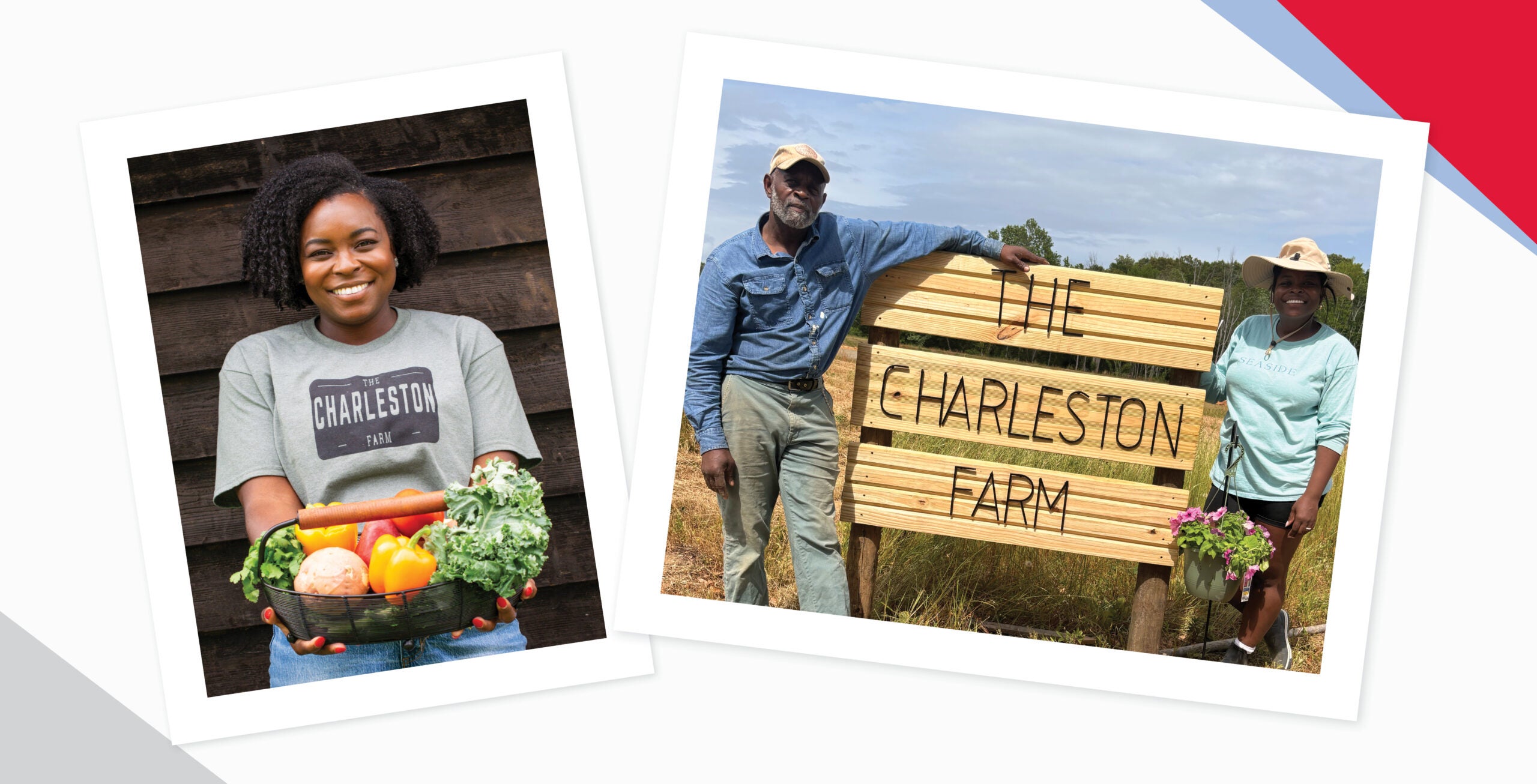
For Dr. Janie Charleston Clay, the answer to improving rural health isn’t always found inside a clinic. Sometimes, it’s beneath the shade of a sprawling Alabama oak tree, surrounded by rows of vegetables and neighbors eager to learn.
As a registered dietitian, public health professional, and lifelong farmer, Clay has built a career that blends two worlds rarely connected so seamlessly. On her family’s multigenerational farm in Alabama’s Black Belt region—named for the rich, dark soil that runs across the lower half of the state—she teaches everything from managing chronic disease to growing fresh produce, proving that farms can nourish both bodies and communities.
For Clay, that mission isn’t simply professional, it’s deeply personal. “The rural community is my community,” she said. Born and raised in Marengo County, Alabama, Clay grew up at her family farm, The Charleston Farm. Long before she became a registered dietitian, the rhythms of planting, harvesting, and caring for the land shaped her understanding of food and community.
“I like to say that I did not have to search for my ‘why.’ It was given to me at birth,” she said. “All I know is farming, as my father and grandfather were farming well before I was born. Farming is a way of life, my peace.”
That foundation eventually led her to Bradley University, where she completed the Dietetic Internship Program in 2014 (which is now the Nutrition & Dietetics major) after earning a master’s degree in public health. Leaving the South for central Illinois meant embracing uncertainty, but it also expanded her perspective.
“My education at Bradley has been instrumental in each stage of my professional development,” Clay said, reflecting on the decision to move to a university she had never visited. “The uncertainty does not equal detour. You’re still on the correct path. You just have to keep moving, one step at a time.”
Putting Her Knowledge to Practice
Returning home to The Charleston Farm allowed Clay to combine her public health expertise with her agricultural roots, serving communities where healthcare resources—and especially nutrition services—can be difficult to access. She understands the challenges because she has lived them.
“The Black Belt of Alabama is plagued with every chronic illness you can imagine,” she said. “Access to services, especially nutrition, is extremely scarce. Most people in rural areas have never heard of a Registered Dietitian.”
Building trust in those communities starts with authenticity. “Trust is earned not given in the rural community,” Clay said. “I know how to reach them, speak their language, and have knowledge of their ways because I am one of them.”
That philosophy inspired one of her most impactful initiatives: Let’s Chat at the Farm.
What began as informal conversations while harvesting vegetables has grown into a community education program where participants learn about chronic disease prevention, nutrition, gardening, and food production—all on the farm itself.
“I would ask if they could meet me at the farm and we could ‘chat’ while I picked okra or peas,” Clay said. “So, this ‘chat’ expanded into a true program.”
The setting itself is part of the experience. “The conversations are organic, light, and are not smothered by four white sterile walls of a doctor’s office or hospital. Open air and unlimited Vitamin D make it the perfect space,” she noted.
She hosts nutrition education classes at the farm. “Participants are able to learn about potassium and literally walk ten feet and dig fresh sweet potatoes out of the ground. All nutrition professionals don’t know much about farming, and all farmers don’t know much about nutrition—but me, I do. I serve as a translator between the two worlds.”
The approach has resonated with people across Alabama and far beyond. Through Charleston Farm’s social media presence (@the_charleston_farm), hundreds of thousands of followers now experience daily life on the farm while learning evidence-based nutrition information rooted in real-life experience. Yet despite the growing audience, Clay remains committed to keeping every lesson authentic.
“We don’t do trending videos or create skits; it’s pure organic content,” she explained. “I aim to be a good steward of the influence by providing useful information coupled with moments that bring genuine joy and kindness.”
Preserving a Legacy
As generations of family members have done before her, Clay sees the farm as both a classroom and a responsibility—one where traditions are passed down alongside practical knowledge about where food comes from and why it matters.
“We must keep going,” she said. “I must keep going.”
Through her work, Clay is doing exactly that—connecting agriculture, nutrition, and public health in ways that strengthen rural communities one conversation, one harvest, and one neighbor at a time.
—Emily Potts