


Bradley Professor Joins Leaders at World Summit
Patricia Saleeby participates in global dialogue on social justice and development
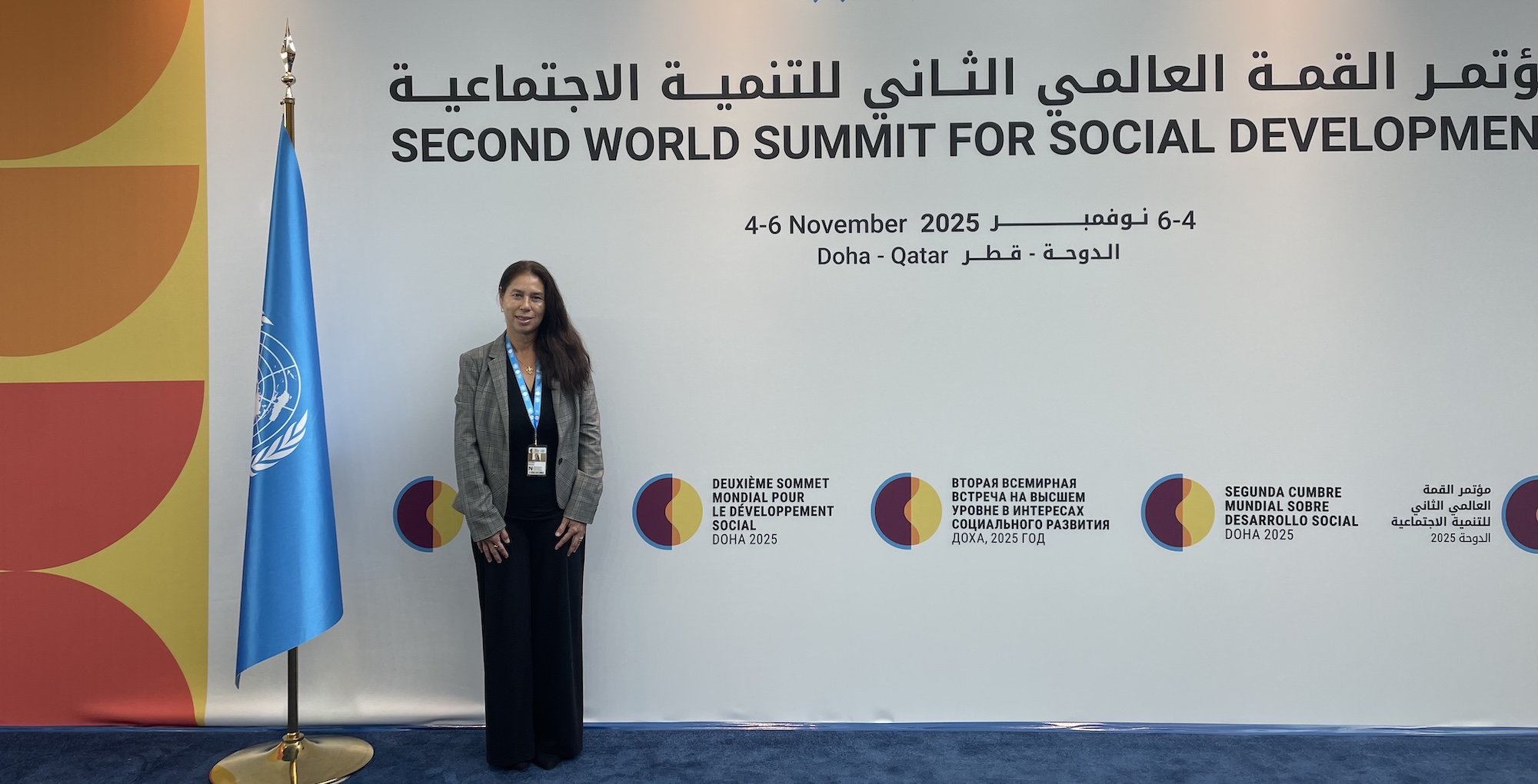
Patricia Saleeby, Department Chair and Director of Bradley University’s Social Work Program, was recently invited to participate in the Second World Summit for Social Development, held November 4–6 in Doha, Qatar. The global event brought together heads of state, ministers, and representatives from international organizations to reaffirm their commitment to tackling poverty and inequality, promoting inclusive development, and strengthening global partnerships.
This year’s summit marked 30 years since the first World Summit in Copenhagen, renewing the international community’s focus on advancing social development as a cornerstone of sustainable progress. Prominent leaders, including United Nations Deputy Secretary-General Amina J. Mohammed, emphasized the vital role of social workers in driving social transformation around the world.
As the North American Regional Representative for the International Federation of Social Workers, Saleeby was invited to speak during a solutions session organized by the International Council on Social Welfare. Her presentation addressed the urgent need for integrated and inclusive social policies to effectively advance global development goals.
“For decades, in countries around the world, we have addressed social issues, economic indicators, and public health as separate challenges, each requiring its own set of policies and experts working independently in these areas,” Saleeby explained. “This approach is fundamentally flawed because, in the real world, these issues are deeply and inextricably linked.”
She stressed that decisions made in one policy area inevitably ripple across others—and that collaboration among agencies can dramatically improve efficiency and outcomes. “This isn’t about spending more; it’s about making every monetary unit of investment work harder for the people we serve,” she noted.
By integrating social, economic, and environmental policies, Saleeby argued, societies can address the upstream social determinants of health, creating systems that support healthier, more equitable communities.
“Integrated social policies are not just a nice idea; they are an essential strategy for a healthier, more just, and more prosperous global society,” Saleeby concluded.