


Gaming Growth: The Many Lessons Learned from FUSE
Explore behind the scenes of this year’s Interactive Media showcase.
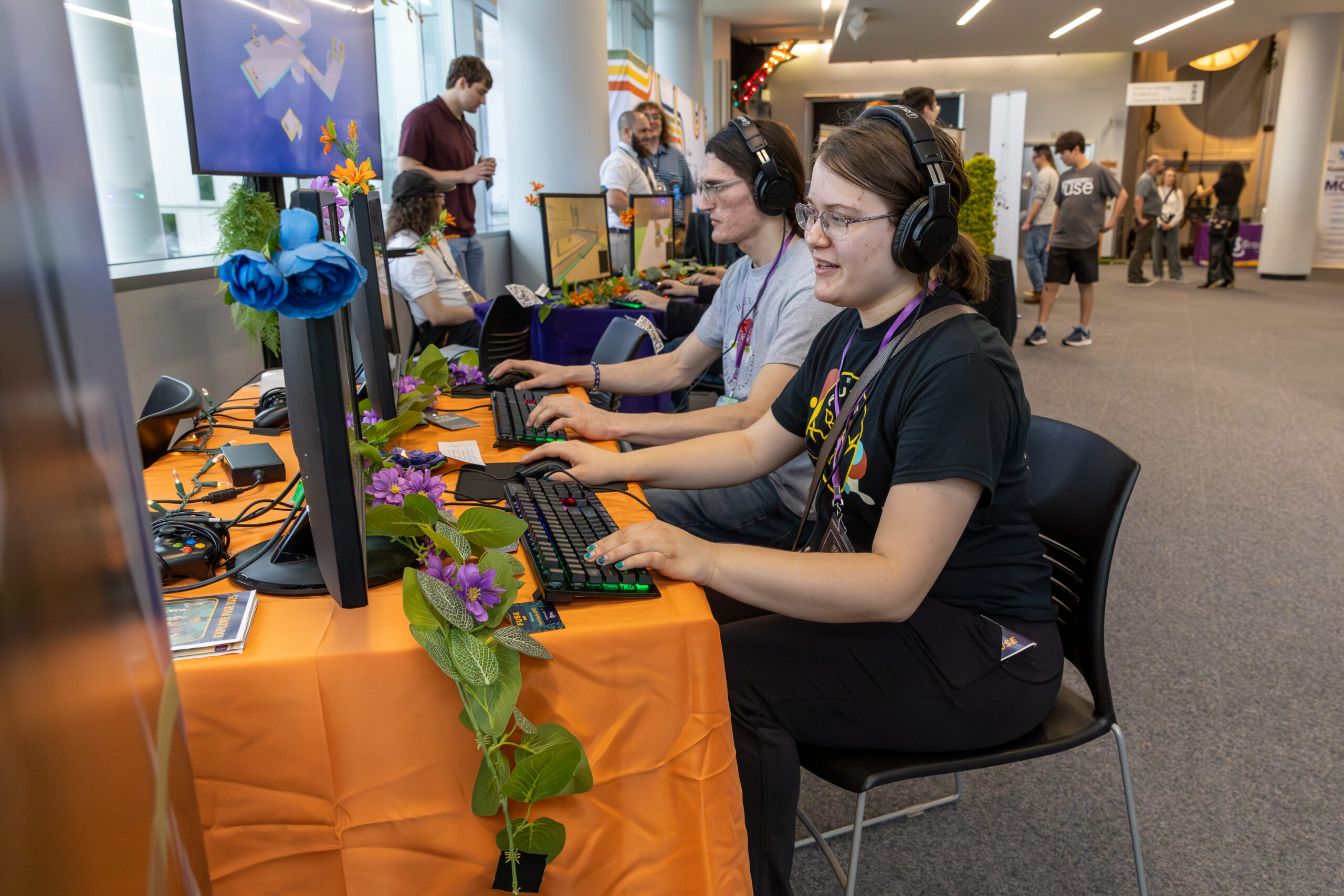
Every year, Interactive Media students draw massive crowds at the Peoria Riverfront Museum for FUSE, a showcase of animations, games, and more. It’s the perfect opportunity to experience the future of entertainment from the very people that’ll be building it.
Jay Guifarro-Castro, a Game Design junior with a minor in Game Project Management, is an Assistant Student Producer on the FUSE production team. This is her third FUSE, having worked as an artist her first year, and then as Lead Logistics Coordinator as a sophomore.
“As the person in charge of team equipment and figuring out the logistics of the event last year, I learned to always have a backup plan in case something changes or goes wrong,” Guifarro-Castro said. “This year, my role has helped me gain insights into event planning and how productions function.”
As a FUSE veteran, Guifarro-Castro knows firsthand just how impactful the event can be for students.
“It’s always exciting to see children playing with their families, friends hanging out, and people having fun,” she said. “It speaks to everyone’s hard work in service of something magical.”
With the massive amount of work that goes into each and every FUSE project, it’s no surprise that Guifarro-Castro isn’t alone in seeing the magic. Junior Game Design major and Computer Game Technology minor Evan Daly showcased a solo project at last year’s FUSE—PickleMan 64, a 3D platformer that he produced alone and is planning on building out into a full commercial release.
“The most rewarding part of FUSE is seeing people enjoy something you’ve created,” Daly said. “It lets students like me see thousands of people enjoy the projects we spent the last four months working toward.”
Taking on Teamwork
This year, Daly is on a much larger team of 12. Their project, Otherworld Safari, is a whack-a-mole-style game where you take photos of animals on an alien planet using a custom-built nine-button controller.
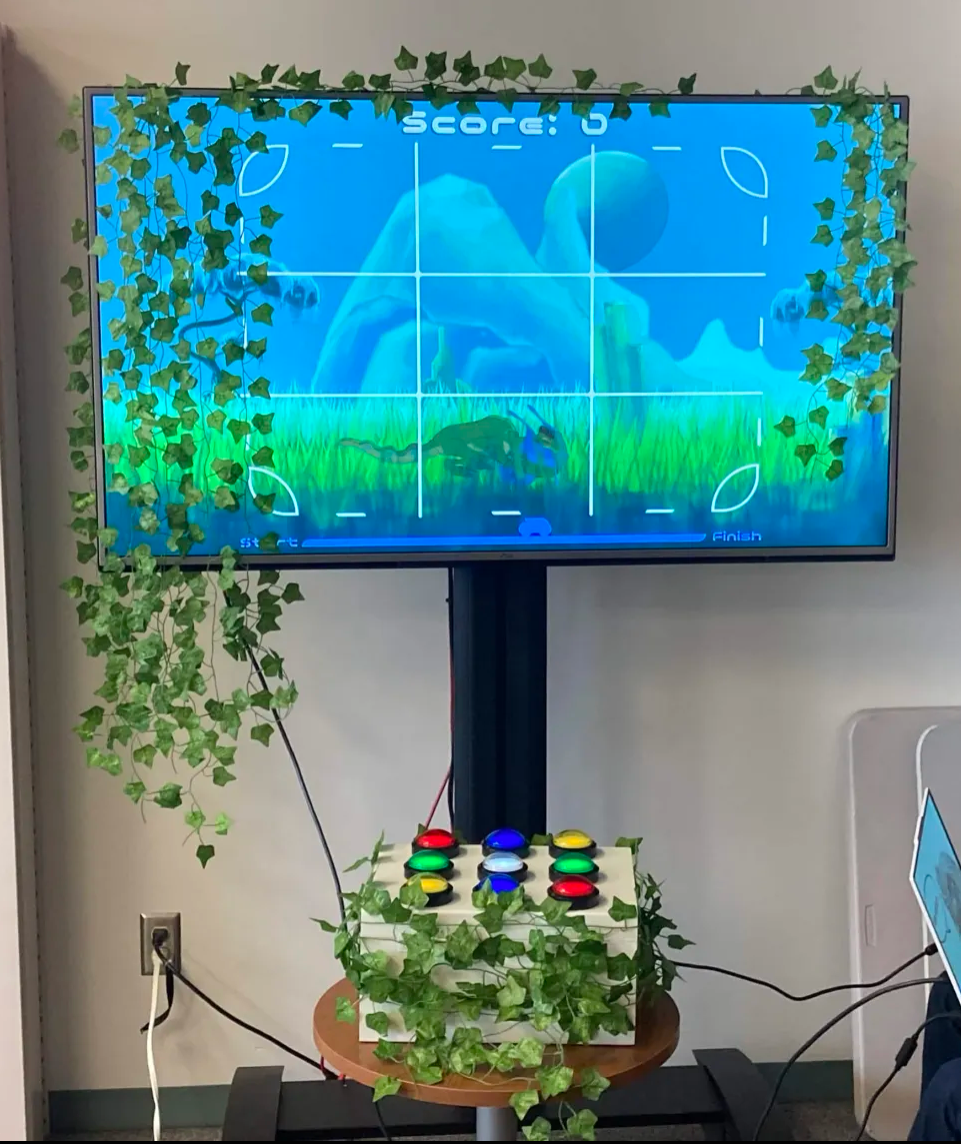
“This project wouldn’t have been possible without everyone playing their part,” Daly said. “Everyone on the team is great at their role, allowing for an incredible experience all around, from the visuals to music to game design. We also collaborated with people outside of the Interactive Media department, mainly students in the Engineering programs who helped out with the handmade controller.”
As producer for Otherworld Safari, Daly says he learned a great deal about working with a team. “My FUSE project helped me improve my communication, set deadlines, schedule meetings, and make decisions decisively as team lead,” he said.
Marlow Greenan, a sophomore Game Design major with minors in Computer Science and Computer Game Technology, had a similar experience while working on the team for Cyber Chicken Showdown, a competitive puzzle game in which each player chooses a cyborg chicken fighter to battle their opponent.
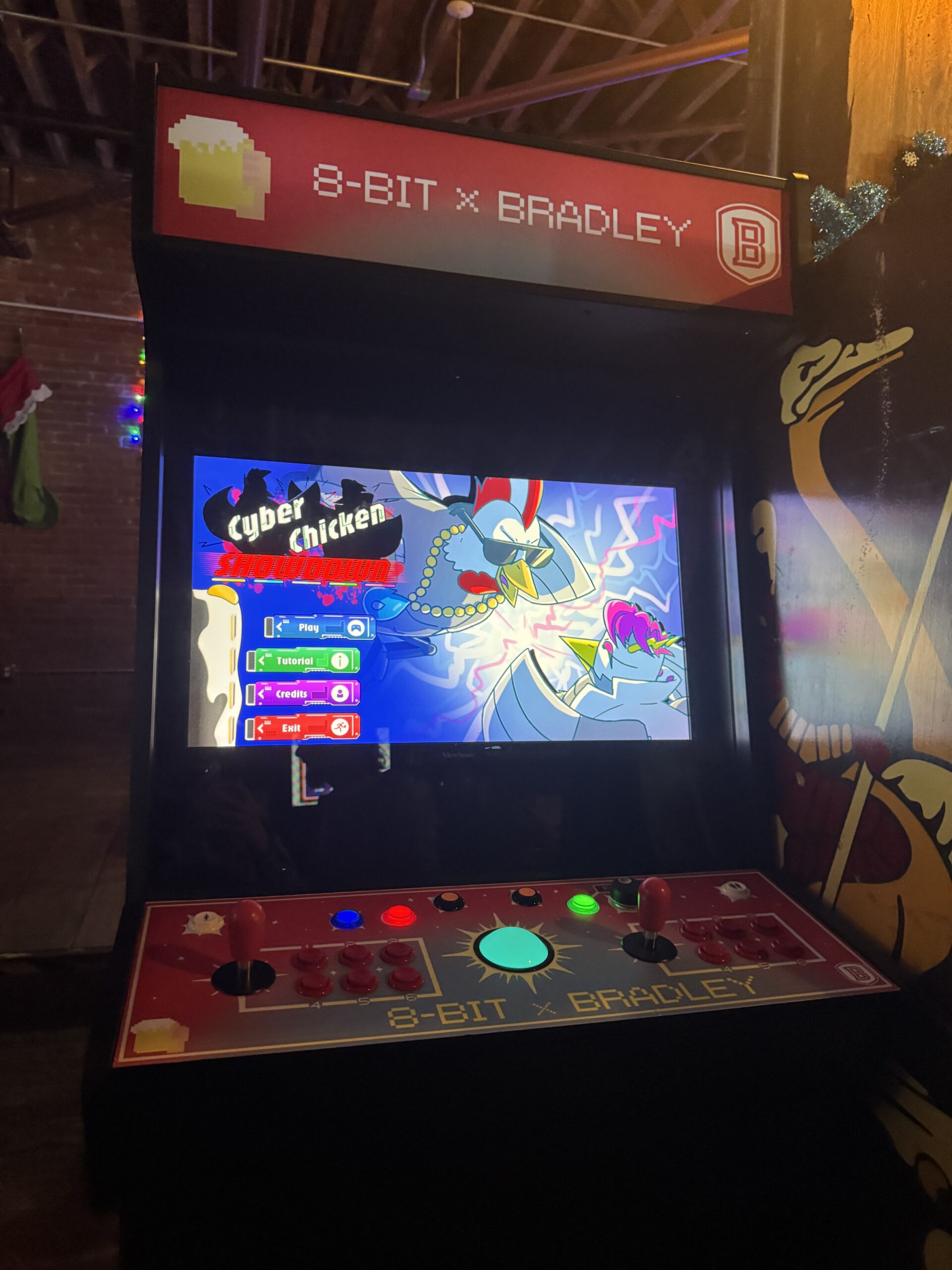
“Collaborating with other people on this FUSE project, especially those with a different focus, taught me about their workflows and how to adjust my programming to make their jobs easier,” Greenan said.
Perhaps it’s fitting then that Cyber Chicken Showdown was initially made for 8-Bit Arcade in Peoria as something friends could play together while having a night out.
If you’re interested in trying out these games and more, don’t miss FUSE on April 11 from 10 a.m. – 5 p.m. at the Peoria Riverfront Museum.
–Jenevieve Rowley-Davis